Marketing
2 Nov 2026
Fragmented experiences: What disconnected loyalty and payment systems cost the business

Heather Dettmann
Principal, Loyalty & Promotions Strategy
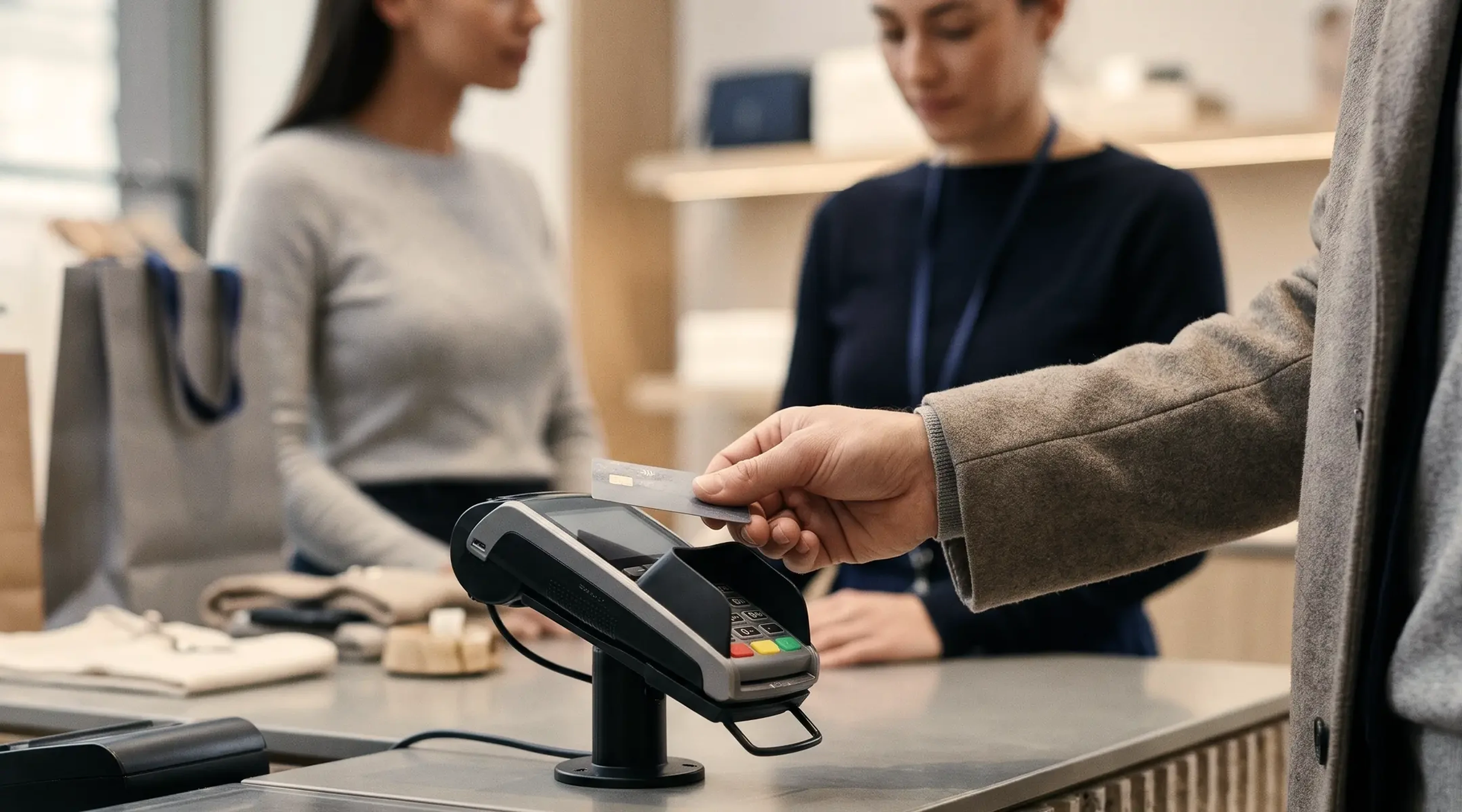
This article is part of our series exploring the future of loyalty and payments, and how bringing the two closer together enables businesses to build stronger customer relationships. In our previous article, The next chapter for Adyen and Talon.One, we explored the thinking behind Adyen and Talon.One joining forces. Here, we look at one of the biggest challenges businesses face today: the identity gap.
A significant share of transactions still happens anonymously. That means businesses miss the opportunity to connect a purchase with everything they already know about the person making it: what they buy, what they value, how often they shop and whether they're a loyal customer.
Even when shoppers belong to a loyalty program, recognition isn't guaranteed. They might not have the app open, remember their login details or want to search for a membership card at checkout. The extra steps are often enough to make them skip identification altogether.
The result is an identity gap. The transaction happens, but the business can't connect it to the customer relationship behind it.
Imagine the Monday after your latest campaign. Three leaders are about to give you three different answers to the same question: how did it go?
Marketing goes first. Redemptions are up, email clicks are strong and app downloads beat the plan.
Finance goes next. Discounts ran above forecast and margin on the promoted lines landed under target. Nobody can say yet how much of the discount went to people who would have bought anyway.
Operations closes. Rewards are still being reconciled across stores and online, while customer service continues to receive a growing number of queries about problems redeeming loyalty points.
Everyone in the room is telling the truth. Each report is accurate for the transactions and customers their systems can identify. But a significant share of purchases still happens anonymously, leaving gaps in the picture. Payments capture the transaction, while loyalty captures the customer relationship. Too often, the two never meet.
The consequences extend beyond incomplete reporting. When loyalty and payments operate independently, businesses miss opportunities to influence customer behavior, spend more on incentives than they need to and introduce operational costs that are difficult to isolate. What appears to be a disconnected customer experience is also a commercial efficiency problem.
One customer, two systems
Your business sees each purchase through two systems. Payments knows how the transaction was made and whether it went through. Loyalty knows a member's history, tier and available offers. But unless the customer identifies themselves at checkout, loyalty has no way of connecting that purchase to their profile.
The challenge becomes more complicated when customer identities are fragmented across channels. Someone might join your program online with a personal email, then sign up again in your app with a work email. They might even be a long-standing member who simply doesn't bother opening the app or finding their membership card when they reach the till.
They buy two items in a store and tap their card. The offer they saw in the app doesn't apply. Their points don't appear. On Thursday, they open the app and find Tuesday's balance, then receive an email promoting the item they already bought.
They probably won't complain. They'll trust you a little less, and open your next email a little less eagerly.
Multiply that experience across all the shoppers who don't identify themselves at checkout, and you begin to see the scale of the problem: the cost of the anonymous shopper.
A forgettable experience is a costly one
Every unidentified transaction is a missed opportunity to learn more about a customer, recognize their loyalty or influence their next purchase. Members who can’t earn and redeem across channels drift away from a program they already joined, yet dormant members still carry acquisition and upkeep costs.
The stakes are rising. As AI shopping agents begin to buy on customers’ behalf, a brand that can’t recognize its own shoppers risks becoming one more interchangeable option, with the relationship owned by whoever does.
Margin pays for what identity can’t
When a business can’t tell who is standing in front of it, it falls back on blunt instruments. Broad discounts go to everyone, including the loyal customer who would have paid full price. Ask a category manager which promotions made money last quarter and you’ll usually hear a confident answer about lift and a hand-wave about margin.
The leaks add up. A sitewide discount, a category offer, a first-order coupon and a points redemption can each be launched by a different team without coordination. Stacking and coupon misuse can go unnoticed for weeks, long after the margin has left.
A purchase takes seconds. Identity, rewards, payment reporting and campaign analytics can take hours or days to catch up. Finance reconciles after the customer has gone, and leaders commit next quarter’s budget using figures that are already stale.
Loyalty touches Marketing, Finance, Service and IT, yet almost nobody owns the whole picture or has a holistic view. Margin source slips through the gaps between teams, which is why it is so hard to find.
Where loyalty and payments is heading
The next chapter of loyalty is likely to be decided at the checkout. Every sale passes through it, and the customer already brings the one thing needed to recognize them: the payment credential they use anyway. There is no app to open, no card to scan and no code to find. Add what the business already knows about them, with their consent, and the outcome can be decided while it can still change.
This creates an opportunity to make loyalty and payments work more closely together. When a returning customer is recognized at checkout, the business can connect their purchase with relevant loyalty information and use that context to offer a reward that makes sense for them. Rather than defaulting to a blanket discount, it can make more considered decisions about incentives, balancing what customers value with business priorities such as conversion, margin and long-term loyalty.

Hear Christoph and Roelant discuss the future of loyalty and payments.
A conversation for the leadership team
Fragmentation lasts because it belongs to everyone and no one. Marketing sees the lost reward, Finance sees the reconciliation backlog, IT sees the integrations, and each reasonably treats the problem as someone else’s. Only the leadership team sees all of it.
A few questions worth taking back to your team.
Which of last quarter’s promotions made money once margin is counted?
How many of our shoppers do we recognize without asking them to do something?
Would we know our best customer if an AI agent did the shopping?
Your best customers are already shopping with you. The question is whether your systems can see them when they do.
Explore further with our payments experts
Discover Adyen’s perspective on why loyalty belongs at the moment of payment.


Monthly loyalty newsletter
Join thousands of marketers and developers getting the latest loyalty & promotion insights from Talon.One. Every month, you’ll receive:
Loyalty and promotion tips
Industry insights from leading brands
Case studies and best practices


Reza Javanian
Loyalty & promotion expert at Talon.One
- Company
- About us
- Press
- Jobs
- Contact us
Get the latest incentives insights, delivered straight to your inbox.

